
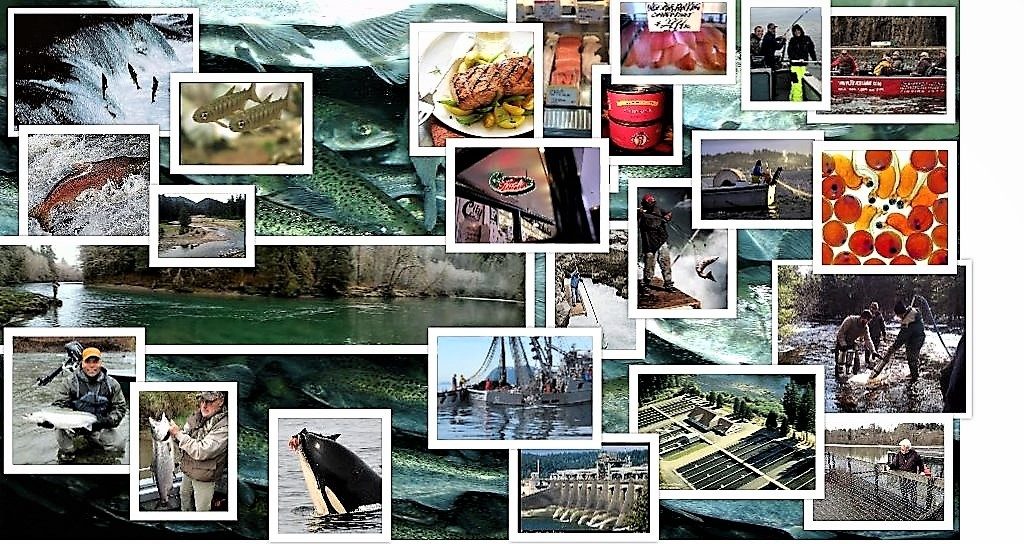
Larry Pryor Presentation to Tacoma Utility Board members 04/24/2024
PUBLIC COMMENT TO TACOMA UTILITIES BOARD TRANSCRIPT- APRIL 24,2024
Thank You for this opportunity to address the board, My name is Larry Pryor and I am a concerned sport angler and Cowlitz River fisheries advocate for over 3 decades.
I am here tonight to comment on the collapse of Cowlitz River Fisheries, Tacoma Utilities funded Hatchery mismanagement, and the Crisis of Tacoma Power’s failure to uphold its fisheries mitigation responsibilities.
I’m concerned you may not be aware of the scope of the problems TU is facing. My comments and those of others tonight, are to inform you of the problems and suggest ways to improve the efficiency and efficacy of the rate payer dollars you are wasting.
We’ve been making similar comments about our concerns through ADHOC, CRAG, Tacoma Power Annual Program Reviews and Fisheries Technical Committees for years now to little improvement.
We hope by making you aware of these problems you can question staff and your Washington Department of Fish & Wildlife partners to gain an understanding of the problem.
In a nutshell:
99% or Worse of the fish released from TU funded hatcheries Fail to Return to the Cowlitz River over the past 5 years!
99.94% of the Fall Chinook salmon released from TPU funded hatcheries Fail to Return to the Cowlitz river! SARs .00060 /.060%
99.76% of the Spring Chinook Salmon released from TPU funded hatcheries Fail to return to the Cowlitz river! SARs .002442 /.24%
98.4% of Coho salmon released from TPU funded hatcheries Fail to Return to the Cowlitz river! SARs .016 /1.6%
98.2% of Winter Steelhead released from TPU funded hatcheries Fail to Return to the Cowlitz river! SARs .0176 /1.76%
98.2% of Summer Steelhead released from TPU funded hatcheries Fail to Return to the Cowlitz river! SARs .018 /1.8%
These are Five-year averages 2019-2023 SARs= Smolt to Adult Returns
Tacoma Utilities and Tacoma Power funded Cowlitz fish hatcheries have some of the worst survival rates for hatchery fish we’ve seen, and the numbers in the report analysis I have provided in front of you support my assertions.
Millions and Millions of Rate Payer Dollars are spent by Tacoma Utilities on the Cowlitz River project to meet mitigation responsibilities and you’re failing. Shouldn’t you be expecting more value for your rate payer money? Shouldn’t We!
This Problem and Crisis has become so severe it may very well create future FERC licensure problems for your mitigated Cowlitz River Project, Dams, and power sales, if not corrected by you soon.
There are three primary problems I see in regards the Cowlitz River fisheries failures.
1 Tacoma Power, and its contractor WDFW, manage to juvenile production goals and not to Adult Return Goals, and Poor antiquated hatcheries management practices result in diminishing adult returns and declining fisheries which limit wild fish recovery settlement obligations.
2 Cowlitz River anglers, businesses, and advocacy groups decades long discussions of these problems at such forums as Ad hoc, CRAG, Annual Program Reviews and Fish Technical Committees, have not been communicated to this board, FERC, and others in regarding the failing fisheries.
3 Tacoma Utilities Director has not been made aware and acted to avoid these crises and concerns.
All Cowlitz River fisheries and Tacoma Power mitigation Recovery efforts are failing due to Hatchery operations mismanagement and basic policy failures.
Failing fisheries, mitigation recovery efforts, Failing Wild fish Recovery, Poor hatchery management practices, Settlement Agreement requirements not met, and much more, this report analysis provided confirm these claims.
The Hatchery Science and Research Group /HSRG 2009 and 2015 Report to U.S. Congress declares: Make your Hatcheries Successful! Maximize Survival of Hatchery Fish; this is not the case for the Cowlitz River fisheries.
You will first hear that “we can’t control ocean impact”, But that’s why we did comparatives following HSRG guidelines.
Within the report I include comparatives of Cowlitz River Wild fish returns that are 3 to 13 times greater than your hatcheries and Mid-Columbia returns that are 5 to 25 time greater than your Cowlitz River hatcheries with the same Ocean Impact as Cowlitz River fisheries!
This presentation is an analysis of publicly available data collected by WDFW, Tacoma Power, NOAA, Pacific States Marine Fisheries Commission, Bonneville Power, and other agencies. I wonder, however, if you have had it presented to you in this sort of format.
Your Immediate attention will be appreciated.
Thank you.
I am available for and further questions at the end of this meeting or using the contact information I have provided.
Larry Pryor
NWFE professional presentation- A Unique New Fisheries Enhancement Group
(click on NWFE professional presentation) –
nwfe-professional-presentation-a-unique-new-fisheries-enhancement-group-2-1 (2)
NWFE presentation to NWPCC / Northwest Power & Conservation Council Portland OR
See below the full presentation, materials and graphs presented to Tacoma Utilities / Tacoma Power Board of Directors, Director of Tacoma Utilities, the manager of Tacoma Power and the Natural Resource manager. 69 pages
Hatcheries can play a role in fish conservation. Ask yourself this:
Are Your Salmon Hatcheries Successful?
Are your Salmonid Hatcheries successful? Too often this question is overlooked or not asked- the HSRG ( Hatchery Science Research Group) published reports to US Congress in 2004, 2009 and 2014, that say make your Hatcheries Successful!
Hatcheries should be judged on Adult Returns not numbers produced and how they can complement and improve wild fish Adult returns in conservation roles.
The basic judge is SARs- (Smolts to Adult Returns) – it’s a basic formula- the number of fish escapement back to the hatchery plus harvest within the terminal fishery (recreational & commercial) divided by the number of fish released by a hatchery by type.
Hatcheries have to often been judged solely on production numbers, many times I’ve met with hatchery staff, when I ask what are your Adult Return Goals, we don’t have any but we produce XXX amount of fish.
HSRG says this is like judging a farmer on how many seeds they planted rather than the crop produced!
I’m not sure why this question is not asked- there are some exceptions, in recent conversations and letters to WDFW Commissioners I ask them to ask- are our hatcheries successful – I’ve not heard them ask yet or WDFW report on SARs – From the SARs I’ve done- especially for fall Chinook programs they are terribly unsuccessful, some Coho programs have been superior, but still few ask.
If you’re a fisherman you need to ask, are our hatcheries successful?
We are dependent on Hatcheries success!
Sincerely Larry Pryor,
Chairman NWFE
Hatcheries can play a role in fish conservation. Ask yourself this:
Are Your Salmon Hatcheries Successful?
Are your Salmonid Hatcheries successful? Too often this question is overlooked or not asked- the HSRG ( Hatchery Science Research Group) published reports to US Congress in 2004, 2009 and 2014, that say make your Hatcheries Successful!
Hatcheries should be judged on Adult Returns not numbers produced and how they can complement and improve wild fish Adult returns in conservation roles.
The basic judge is SARs- (Smolts to Adult Returns) – it’s a basic formula- the number of fish escapement back to the hatchery plus harvest within the terminal fishery (recreational & commercial) divided by the number of fish released by a hatchery by type.
Hatcheries have to often been judged solely on production numbers, many times I’ve met with hatchery staff, when I ask what are your Adult Return Goals, we don’t have any but we produce XXX amount of fish.
HSRG says this is like judging a farmer on how many seeds they planted rather than the crop produced!
I’m not sure why this question is not asked- there are some exceptions, in recent conversations and letters to WDFW Commissioners I ask them to ask- are our hatcheries successful – I’ve not heard them ask yet or WDFW report on SARs – From the SARs I’ve done- especially for fall Chinook programs they are terribly unsuccessful, some Coho programs have been superior, but still few ask.
If you’re a fisherman you need to ask, are our hatcheries successful?
We are dependent on Hatcheries success!
Sincerely Larry Pryor,
Chairman NWFE
APPENDIX 9
REFERENCES AND OTHER RESOURCES
Resources and References:
Releases, numbers, dates sizes: Pacific States Marine Fisheries Commission / Regional Mark Processing Center
https://www.psmfc.org/ https://www.rmpc.org/
NOAA Fisheries; Salmon Life Cycle and Seasonal Fishery Planning for the management of seasonal fisheries.
Hatcheries Escapement reports (returns to the hatchery): https://wdfw.wa.gov/fishing/management/hatcheries/escapement
Harvest/ State Sport Catch Reports: https://wdfw.wa.gov/publications?title=&category=26269&author=
Harvest and Catch reports (Sports catch/ harvest) https://wdfw.wa.gov/fishing/management/hatcheries/escapement
HSRG report to US Congress, 2004, 2009, 2015
https://www.streamnet.org (Previously http://www.hatcheryreform.us)
Fish Passage Center https://FPC.org https://www.fpc.org/documents/Q_fpc_cssreports.php
Comparative Survival Study /CSS https://www.fpc.org/documents/CSS/CSS%20Annual%20Report%202023.pdf
Priest Rapids Hatchery Monitoring & Evaluation 2021-2022 https://www.grantpud.org/templates/galaxy/images/images/Downloads/ResourceCommittees/OtherDocuments/2022_12_15_Grant_-_Priest_Rapids_Hatchery_Monitoring_and_Evaluation_Annual_Report_for_2021-2022_Final.pdf
Cowlitz Falls Fish Facility release reports 2016-2023 provided by Tacoma Power, Cowlitz Falls Fish Facility end of year reports, email chain to lpryor@nwfe.org, provided on request
FERC.gov
https://elibrary.ferc.gov/eLibrary/search Docket Number P-2016
herrea beutler
MYTPU.org
mytpu.org MAYFIELD DAM DOWNSTREAM MIGRANT SMOLT SURVIVAL STUDY USING ACOUSTIC TAG METHODOLOGIES IN 2014 By HTI- Hydroacoustic Technologies for Tacoma Power https://www.mytpu.org/wp-content/uploads/6-2014-mayfield-downstream-survival-final-report.pdf
 Northwest Fisheries Enhancement - NWFE